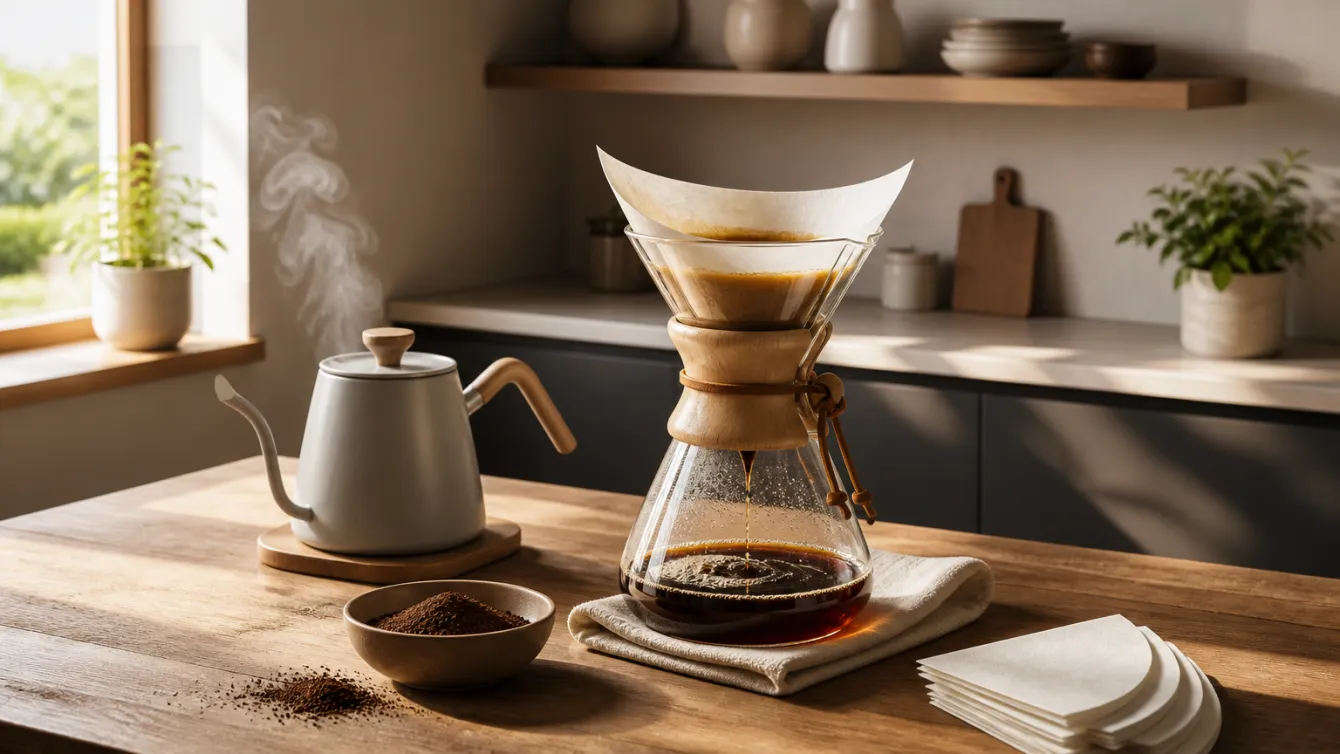
Users gain insights into various pour-over coffee systems, including the Melitta Senz V, Chemex, and Kalita Wave, with prices varying widely. Key factors include coffee grind size, water temperature, and pouring technique, which affect flavour extraction. The first step is to determine the desired brewing method, considering factors like capacity and design, to enhance the coffee experience.
What You Get
- Precision Brewing
- Pour-over coffee systems allow for precise control over brewing variables, including water flow and temperature, essential for optimal extraction.
- Enhanced Flavour Extraction
- Using fine-ground coffee can yield a total dissolved solids (TDS) content of 780–799 ppm, significantly enhancing flavour extraction.
- Customisable Ratios
- The optimal coffee-to-water ratio is generally 1:15, allowing users to adjust strength according to personal preference.
- Varied Designs for Different Needs
- Pour-over coffee makers come in various shapes, including conical and flat-bottom designs, each affecting the brewing process and flavour profile.
- Forgiving Techniques for Beginners
- Models like the Kalita Wave 185 are recommended for beginners due to their forgiving nature regarding pouring techniques.
- Aesthetic Appeal
- Many pour-over systems, such as the Chemex, feature elegant designs that not only brew great coffee but also serve as attractive kitchen decor.
Pour Over Coffee Systems: A Comprehensive Comparison
- Option
- Melitta Senz V Connected Smart Pour-over Coffee System
- Price
- U уточняйте
- Brewing Time
- U уточняйте
- Requirements
- Requires fine-ground coffee for optimal extraction
- Limitations
- Capacity of 12 ounces
- Option
- Chemex
- Price
- U уточняйте
- Brewing Time
- U уточняйте
- Requirements
- Uses specially bonded paper filters
- Limitations
- Produces less bitterness
- Option
- Kalita Wave 185
- Price
- U уточняйте
- Brewing Time
- U уточняйте
- Requirements
- Forgiving of pouring technique, suitable for beginners
- Limitations
- U уточняйте
- Option
- V60
- Price
- U уточняйте
- Brewing Time
- U уточняйте
- Requirements
- Requires precise pouring technique
- Limitations
- U уточняйте
- Option
- Gooseneck kettle
- Price
- U уточняйте
- Brewing Time
- U уточняйте
- Requirements
- Allows precise control over water flow
- Limitations
- U уточняйте
How to Brew Pour-Over Coffee
- Gather Your Equipment
You will need a pour-over coffee maker (such as Chemex or Kalita Wave), a gooseneck kettle for precise water flow, a coffee grinder, and fresh coffee beans.
- Measure Coffee and Water
Use the optimal coffee-to-water ratio of 1:15. For example, if using 15 grams of coffee, measure 225 grams (or 7.5 ounces) of water.
- Grind the Coffee
Grind the coffee beans to a fine consistency, which can yield a total dissolved solids (TDS) content of 780–799 ppm, enhancing flavour extraction.
- Heat the Water
Heat the water to around 90–96°C (194–205°F). This temperature range is crucial for optimal extraction.
- Begin Brewing
Pour the hot water over the coffee grounds in a circular motion, ensuring even saturation. Follow the 15-15-15 rule: 15 grams of coffee, 15 ounces of water, and a brew time of 15 seconds for optimal extraction.
- Monitor Extraction Time
Allow the coffee to brew for 2.5 to 4 minutes, depending on the grind size and method. Adjust the time based on your taste preference.
- Taste and Adjust
After brewing, taste the coffee. If it’s too bitter, consider coarser grind or shorter brew time; if too weak, try a finer grind or longer brew time.
Risks, Limitations, and Conditions
Pour-over coffee systems come with specific risks and limitations that users should consider. The Melitta Senz V, for instance, requires fine-ground coffee for optimal extraction, which may not be suitable for all users, particularly those who prefer coarser grinds. Additionally, its capacity is limited to 12 ounces, which may not meet the needs of larger households or gatherings[1].
Common mistakes in brewing include using the wrong grind size, improper water temperature, and inconsistent pouring techniques. These factors can lead to subpar flavour extraction and undesired coffee profiles[2]. The geometry of different pour-over designs, such as flat-bottom versus conical, can also affect the brewing process and flavour, with some designs being more forgiving of pouring inconsistencies than others[3].
When purchasing, check the return policy as many retailers have specific conditions. If the product does not meet expectations, ensure that it is eligible for return or exchange. Be aware that some systems may not perform well if the user does not adhere to recommended brewing parameters, such as the optimal coffee-to-water ratio of 1:15, which is crucial for achieving the desired strength and flavour[3].
FAQ
- What is the best device for pour-over coffee?
The best device for pour-over coffee often depends on personal preference and brewing style. The Chemex is renowned for its elegant design and ability to produce a vibrant cup with less bitterness, while the Kalita Wave 185 is recommended for beginners due to its forgiving nature regarding pouring technique[4][5].
- Is pour-over really better than drip?
Pour-over coffee systems are praised for producing a medium-bodied cup with sharp clarity, distinguishing them from traditional drip coffee makers, which may lack this level of precision[6]. The choice between the two often hinges on the desired flavour profile and brewing control.
- What is the 15-15-15 rule for coffee?
The 15-15-15 rule for coffee suggests using 15 grams of coffee, 15 ounces of water, and a brew time of 15 seconds for optimal extraction[5]. This guideline helps ensure a balanced flavour in the resulting brew.
- What is the best method for pouring over coffee?
The best method for pouring over coffee involves using a gooseneck kettle for precise control over water flow, which is crucial for achieving optimal extraction[6]. Pouring in a circular motion to ensure even saturation of the coffee grounds is also recommended.
- How do I choose a pour-over coffee maker?
Choosing a pour-over coffee maker involves considering factors such as shape, material, and ease of use. Conical designs can require more precision, while flat-bottom designs are often more forgiving of inconsistent pouring[5][3]. Additionally, aesthetic appeal and capacity may influence the decision.
- What accessories do I need for pour-over coffee?
Essential accessories for pour-over coffee include a gooseneck kettle for controlled pouring, a coffee grinder for fresh grounds, and high-quality filters compatible with the chosen coffee maker. These tools enhance the brewing process and overall flavour extraction.
- What grind size is best for pour-over coffee?
The best grind size for pour-over coffee is generally fine, as this can yield a total dissolved solids (TDS) content of 780–799 ppm, enhancing flavour extraction[7]. However, the grind size may need to be adjusted based on the specific pour-over method and personal taste preferences.
Explore More About Coffee Brewing
Dive into our extensive resources to enhance your brewing skills.
Discover MoreSources
- Melitta Senz V Connected Smart Pour-over Coffee System
- Best Pour Over Coffee Maker: I Tested 11 Models (Winners & Losers)
- Best pour-over coffee makers: V60, Chemex, Kalita, Origami compared
- The best pour-over coffee makers of 2026, tried and tested
- The Best Pour-Over Coffee Makers
- The 8 Best Pour-Over Coffee Makers of 2026, Tested & ...
- Innovative coffee filter cups enhance pour-over coffee quality while providing bioactive benefits
 Best Coffee Grinders for Perfect Brews in 2026Discover the best coffee grinders for perfect brews in 2026, featuring top picks, comparisons, and expert insights to elevate your coffee e…
 How to Brew Pour Over Coffee: A Step-by-Step GuideLearn how to brew pour over coffee with our step-by-step guide, ensuring a rich and flavourful cup every time.